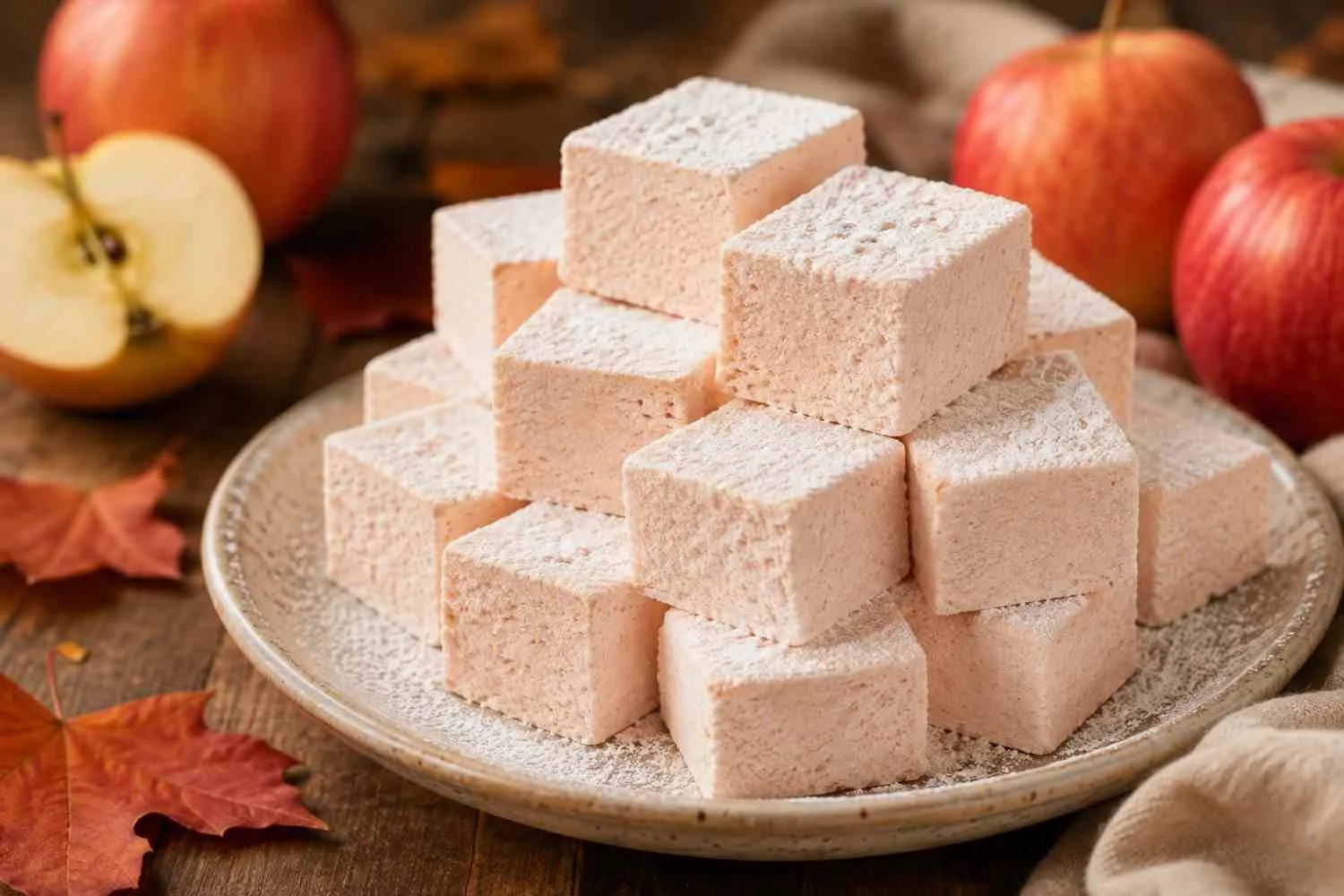
This apple marshmallow recipe combines the soft, airy texture of homemade marshmallows with the familiar flavor of sweet apples. Instead of making a plain vanilla marshmallow and simply adding apple flavoring, this version is designed around apple as the main flavor, giving you a treat that works especially well for fall desserts, holiday trays, hot chocolate, gifting, or homemade s’mores. The key is balancing the apple flavor with the sweetness of the marshmallow.
Apple Marshmallow Ingredients
| Ingredient | Amount | Purpose |
| Granulated sugar | 2 cups | Sweetness and structure |
| Light corn syrup | ½ cup | Helps create a smooth texture |
| Water | ½ cup | Dissolves the sugar |
| Unflavored gelatin | 3 tablespoons | Gives the marshmallows structure |
| Cold water | ½ cup | Blooms the gelatin |
| Unsweetened apple puree | ¼ cup | Adds apple flavor |
| Vanilla extract | 1 teaspoon | Rounds out the flavor |
| Apple extract | ½–1 teaspoon | Intensifies apple flavor |
| Fine salt | ¼ teaspoon | Balances sweetness |
| Powdered sugar | ½ cup | Coating |
| Cornstarch | ½ cup | Prevents sticking |
Choose an apple puree with a concentrated flavor and minimal added liquid. If you’re making your own, cook peeled and chopped apples until tender, then blend them until smooth and let the puree cool completely before using.

What Kind of Apples Work Best?
The apple variety can influence the flavor of the finished marshmallows.
For a sweeter result, Honeycrisp, Gala, or Fuji can work well. If you prefer a more noticeable tart apple flavor, Granny Smith can provide useful acidity.
You can also combine varieties. A sweet apple provides body and natural sweetness, while a tart apple keeps the flavor from becoming too heavy.
The most important point is to avoid adding a large amount of watery apple puree. Too much moisture can interfere with the texture of the marshmallows.

Prepare the Pan
Before cooking the sugar syrup, prepare your pan because the marshmallow mixture becomes thick and sticky very quickly.
Lightly grease an 8-inch or 9-inch square baking pan.
Mix powdered sugar and cornstarch together and dust the bottom and sides of the pan generously. Keep some of this mixture aside because you’ll need it after cutting the marshmallows.
A prepared pan makes the sticky mixture much easier to remove later.

Bloom the Gelatin
Pour the cold water into the bowl of a stand mixer and sprinkle the gelatin evenly over it.
Let it sit for about 5–10 minutes.
The gelatin should absorb the water and become soft.
Don’t skip this step. Properly bloomed gelatin distributes more evenly when the hot sugar syrup is added and helps provide the structure needed for soft but stable marshmallows.
Cook the Apple Marshmallow Syrup

Add the granulated sugar, corn syrup, water, and salt to a medium saucepan.
Place the pan over medium heat and stir until the sugar has dissolved.
Once the mixture reaches a steady boil, stop stirring frequently and continue cooking until it reaches approximately 240°F (115°C) on a candy thermometer.
Temperature matters here. If the syrup doesn’t reach the appropriate stage, the marshmallows may remain too soft. If it becomes significantly hotter, the finished texture can become firmer and chewier.
A candy thermometer is one of the most useful tools for getting consistent homemade marshmallows.
Add the Apple Flavor
Once the syrup reaches the correct temperature, carefully pour it into the bowl containing the bloomed gelatin while the mixer is running on low.
Gradually increase the mixer speed.
Add the cooled apple puree, vanilla extract, and apple extract according to your preferred intensity.
Be careful when working with the hot syrup. The mixture is extremely hot at this stage, so pour it slowly and avoid splashing.

Whip Until Light and Fluffy
Increase the mixer to high speed and whip the mixture for approximately 8–12 minutes.
As it whips, the mixture should become:
- Thick
- Glossy
- Pale
- Fluffy
- Much larger in volume
The mixture should hold soft peaks and look substantially different from the thin syrup you started with.
The exact whipping time can vary depending on your mixer, so pay attention to the texture rather than relying only on the clock.
Add the apple flavor gradually if you’re adjusting the intensity. It’s easier to build the flavor carefully than to correct an overly strong extract later.
Transfer and Set the Marshmallows
Immediately pour the whipped mixture into the prepared pan.
Use a lightly greased spatula to spread it evenly.
The mixture will be sticky, so don’t spend too much time trying to create a perfectly smooth surface. Work efficiently while it’s still easy to spread.
Dust the top lightly with the powdered sugar and cornstarch mixture.

Leave the pan at room temperature for at least 4 hours. For easier cutting and a cleaner texture, letting the marshmallows set overnight is even better.
Avoid cutting them too early. The center needs enough time to develop its final structure.
Cut the Apple Marshmallows
Once fully set, dust a cutting board with the powdered sugar and cornstarch mixture.
Carefully remove the marshmallow slab from the pan.
Use a lightly greased knife or a knife dusted with the coating mixture to cut it into squares.
After every few cuts, clean and dust the knife if necessary.
Immediately coat the freshly exposed sticky edges with the powdered sugar and cornstarch mixture.
This keeps the pieces from sticking together and makes them easier to package.

How to Make the Apple Flavor Stronger
If your first batch tastes too subtle, don’t simply add a large amount of apple puree. Extra puree adds moisture, which can affect the texture.
Instead, consider using:
- A small amount of apple extract
- Concentrated apple puree
- Reduced apple juice
- A combination of sweet and tart apple flavors
You can also finish the marshmallows with a light dusting of apple-flavored sugar or cinnamon sugar.
For a more autumn-inspired version, cinnamon can complement the apple beautifully. Add it carefully so it supports the fruit rather than hiding it.
Apple Marshmallow Flavor Variations
Caramel Apple Marshmallows
Add a small caramel drizzle over the finished marshmallows, or pair them with a spoonful of classic apple sauce for a sweet, fruity contrast.

Apple Cinnamon Marshmallows
Add a small amount of ground cinnamon to the coating mixture. This gives the marshmallows a warm, bakery-style flavor. You can check out our recent recipe on cinnamon based marshmallows.
Apple Pie Marshmallows
Combine apple flavor with cinnamon and a small amount of nutmeg for a dessert inspired by classic apple pie.
Caramel Apple Hot Chocolate
Place an apple marshmallow on top of hot chocolate based marshmallow and finish with a small caramel drizzle for a cozy seasonal drink.

How to Serve Apple Marshmallows
These marshmallows are especially versatile during autumn and the holiday season.
Hot Chocolate
Add one or two to a cup of hot chocolate. The marshmallow slowly softens and adds sweetness as it melts.
Coffee
A small apple marshmallow can add sweetness and a subtle fruity note to coffee.
Dessert Boards
Arrange them with cookies, chocolate, caramel, nuts, and fresh fruit.
S’mores
For a seasonal twist, pair apple marshmallows with cinnamon-flavored crackers and chocolate.
Holiday Gifts
Place assorted apple marshmallows in food-safe bags or boxes for homemade gifts.
Common Problems and How to Fix Them
Marshmallows Are Too Sticky
This can happen if the syrup wasn’t cooked properly, the mixture contains too much moisture, or the pieces weren’t coated thoroughly.
Make sure your syrup reaches the appropriate temperature and use enough powdered sugar and cornstarch to coat the cut surfaces.
Apple Flavor Is Too Weak
Try concentrated apple flavor or a small amount of apple extract rather than dramatically increasing the puree.
Marshmallows Are Too Firm
Overcooking the sugar syrup can produce a firmer texture. Check the temperature carefully with a reliable thermometer.
Marshmallows Didn’t Set
Improperly bloomed gelatin or an incorrectly cooked syrup can prevent the mixture from developing enough structure.
Pieces Stick Together
Dust all sides thoroughly with the powdered sugar and cornstarch mixture before storing.
How to Store Apple Marshmallows
Store the finished marshmallows in an airtight container at room temperature in a cool, dry place.
Keep them away from humidity because moisture can make the coating sticky and soften the exterior.
Avoid stacking large numbers of marshmallows without a coating between them. If the pieces become slightly sticky after storage, lightly dust them again with the powdered sugar and cornstarch mixture.
If your recipe includes additional perishable fillings or toppings, storage requirements may be different.
Tips for Better Apple Marshmallows
For a more reliable batch, keep these practical points in mind:
- Use a candy thermometer rather than guessing the syrup temperature.
- Bloom the gelatin completely before adding the hot syrup.
- Don’t add excessive apple puree.
- Use concentrated apple flavor when necessary.
- Whip until the mixture becomes thick and fluffy.
- Prepare the pan before beginning the syrup.
- Let the marshmallow set completely before cutting.
- Coat every cut surface to prevent sticking.
- Store the finished pieces away from humidity.
- Balance sweet apples with a little tartness for a more noticeable flavor.
The biggest improvement usually comes from controlling moisture and temperature. Apple contains water, so adding too much can make an otherwise well-made marshmallow softer and stickier than intended.
Frequently Asked Questions
Can I use fresh apples in this marshmallow recipe?
Yes, but fresh apples should be cooked and pureed first. A smooth, concentrated puree works better than adding raw apple pieces directly to the marshmallow mixture.
What apples are best for apple marshmallows?
Honeycrisp, Gala, Fuji, and Granny Smith can all work. Sweet apples give a softer fruit flavor, while tart apples provide more contrast.
Why don’t my apple marshmallows taste strongly like apple?
Fresh apple puree can contain a lot of water and relatively subtle flavor. Concentrated puree or a small amount of apple extract can make the apple character more noticeable without adding excessive moisture.
Can I add cinnamon?
Yes. Cinnamon pairs naturally with apple. Add a small amount to the marshmallow mixture or use cinnamon sugar as part of the coating.
Can I make apple marshmallows without apple extract?
Yes. You can rely on concentrated apple puree or reduced apple juice, although the flavor may be more delicate.
How long should apple marshmallows set?
Give them at least 4 hours at room temperature, but overnight is preferable if you want especially clean cuts.
Can I use apple marshmallows for s’mores?
Absolutely. Apple marshmallows can make a seasonal s’mores variation, especially when paired with chocolate and cinnamon.
Final Thoughts
This apple marshmallow recipe is a fun way to move beyond the classic vanilla version while keeping the soft, airy texture that makes homemade marshmallows so enjoyable. The key is to give the apple flavor enough concentration without adding too much moisture.
Choose an apple variety based on the flavor you want, prepare the puree carefully, and use a candy thermometer to control the sugar syrup. Once the marshmallow mixture has been whipped until thick and fluffy, give it plenty of time to set before cutting.
For an especially cozy dessert, combine the finished marshmallows with cinnamon, caramel, chocolate, or hot cocoa. The result is a homemade treat with a gentle apple flavor, soft texture, and plenty of seasonal character.