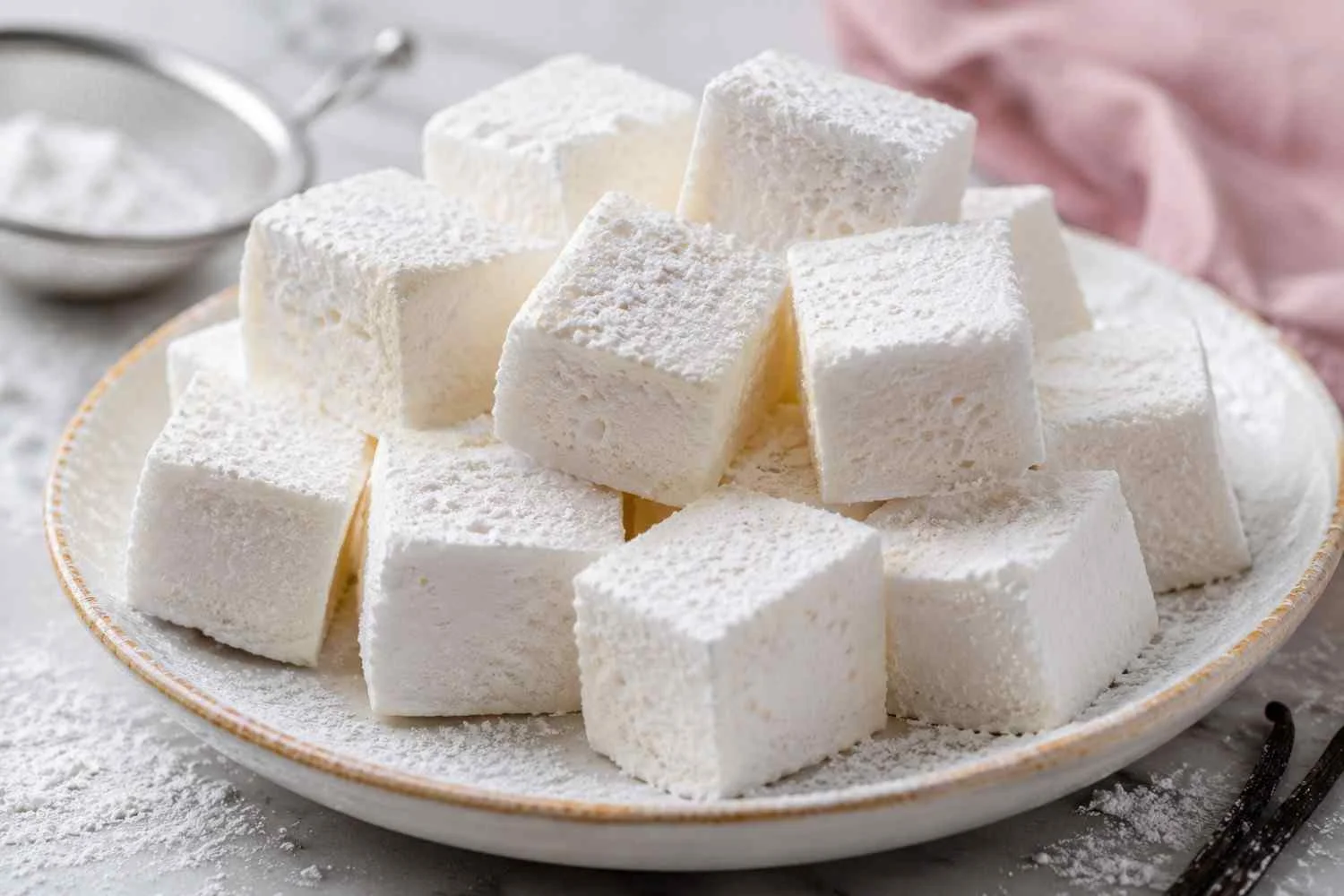
If you are searching for a marshmallow recipe without gelatin, you’re in the right place. Traditional marshmallows rely on gelatin to create their signature soft and fluffy texture, but it’s entirely possible to make a delicious alternative using agar agar, a plant-based gelling agent derived from red seaweed. This recipe delivers light, tender marshmallows with a pleasant chew, making them an excellent choice for vegetarians or anyone looking to avoid animal-based ingredients. With a few simple pantry staples and the right technique, you can create homemade marshmallows that are perfect for hot chocolate, desserts, or enjoying as a sweet treat on their own.
Recipe at a Glance
Before you begin, here’s a quick overview of this homemade marshmallow recipe without gelatin.
| Recipe Detail | Information |
| Recipe Name | Marshmallow Recipe Without Gelatin |
| Cuisine | International |
| Course | Dessert, Candy |
| Prep Time | 25 minutes |
| Cook Time | 15 minutes |
| Resting Time | 4–6 hours |
| Total Time | About 6 hours 40 minutes |
| Yield | 30–36 marshmallows |
| Difficulty | Intermediate |
| Calories | Approximately 40 calories per marshmallow |
| Dietary Information | Vegetarian |
Ingredients You’ll Need

This recipe uses simple ingredients that work together to create soft, fluffy marshmallows without using gelatin. Measuring each ingredient accurately is essential because agar agar sets differently than gelatin and requires precise proportions for the best results.
Ingredients
| Ingredient | Amount |
| Agar agar powder | 2 tablespoons |
| Water | 1 cup (divided) |
| Granulated sugar | 2 cups |
| Light corn syrup or glucose syrup | ¾ cup |
| Pure vanilla extract | 2 teaspoons |
| Fine salt | ¼ teaspoon |
| Powdered sugar | ½ cup |
| Cornstarch | ½ cup |
Why These Ingredients Matter
Agar Agar Powder
Agar agar is the key ingredient that replaces gelatin in this recipe. Made from red seaweed, it creates a firm yet tender structure when heated properly. Unlike gelatin, agar must be brought to a full boil to activate its setting properties.
Granulated Sugar

Sugar forms the base of the syrup and provides sweetness while contributing to the marshmallows’ light texture. Cooking it to the correct temperature is essential for achieving the right consistency.
Light Corn Syrup or Glucose Syrup
Corn syrup or glucose syrup helps prevent sugar crystals from forming during cooking, resulting in smooth marshmallows with a more even texture.
Water
Water is used to dissolve the agar agar and cook the sugar syrup. The correct amount helps activate the agar while ensuring the syrup reaches the proper consistency.

Pure Vanilla Extract
Vanilla adds the classic marshmallow flavor and complements the sweetness without overpowering the recipe.
Salt
A small amount of salt balances the sweetness and enhances the overall flavor of the marshmallows.
Powdered Sugar and Cornstarch
These ingredients are combined to coat the finished marshmallows, preventing them from sticking together and making them easier to cut and handle.
Expert Tip: Always use agar agar powder rather than agar flakes unless you’re adjusting the measurements. Powder dissolves more evenly and produces consistent results, making it the preferred choice for homemade marshmallows.

How to Prepare Gelatin Free Marshmallows
Making marshmallows without gelatin is straightforward when you follow each stage carefully. Preparing your ingredients before you begin will make the process much smoother.
Prepare the Pan
Lightly grease an 8×8-inch baking pan or line it with parchment paper. In a small bowl, mix the powdered sugar and cornstarch together. Set this mixture aside for coating the marshmallows after they have set.
Dissolve the Agar Agar

In a saucepan, combine the agar agar powder with half of the water. Stir well and place the pan over medium heat. Bring the mixture to a gentle boil while stirring continuously until the agar has completely dissolved. This step is essential because agar will not activate properly if it isn’t fully boiled.
Cook the Sugar Syrup
Add the remaining water, granulated sugar, corn syrup, and salt to the saucepan with the dissolved agar. Continue heating over medium heat until the sugar dissolves completely.
Once the mixture begins to boil, stop stirring and cook until it reaches 240°F (115°C) on a candy thermometer. This temperature helps create marshmallows with the right balance of softness and structure.
Whip the Mixture
Carefully pour the hot syrup into the bowl of a stand mixer. Beat on medium-high speed for about 10 to 12 minutes, or until the mixture becomes thick, glossy, and noticeably lighter in color.
During the final minute of mixing, add the vanilla extract and continue beating until it is fully incorporated.

Spread and Set
Immediately transfer the marshmallow mixture into the prepared baking pan. Use a lightly greased spatula to spread it evenly into the corners and smooth the surface.
Leave the pan uncovered at room temperature for 4 to 6 hours, or until the marshmallows are completely firm.
Cut and Coat
Dust a clean work surface with the powdered sugar and cornstarch mixture. Turn the marshmallow slab out of the pan and cut it into squares using a lightly greased knife or pizza cutter.
Coat each marshmallow generously in the remaining powdered sugar mixture to prevent sticking and create the classic soft exterior.
Why Agar Agar Is the Best Gelatin Substitute
Agar agar has become one of the most popular alternatives to gelatin, especially for homemade desserts and candies. Derived from red seaweed, this natural setting agent creates a firm structure without using animal-based ingredients. While the texture is slightly different from traditional gelatin marshmallows, agar agar produces delicious results when used correctly.
If you’re making marshmallows without gelatin for the first time, understanding how agar agar works will help you achieve a better texture and more consistent results.

It’s Completely Plant-Based
Unlike gelatin, which is made from animal collagen, agar agar comes from seaweed. This makes it an excellent option for vegetarians and anyone looking for a plant-based gelling ingredient. If you’re also checking dietary considerations, learn more about are marshmallow gluten free before choosing your ingredients.
It Creates a Stable Structure
Agar agar forms a firm gel once it cools, helping marshmallows hold their shape without becoming overly sticky. This stability also makes them easier to cut into clean, even squares.
It Sets Faster Than Gelatin
One of agar agar’s biggest advantages is how quickly it sets. While traditional marshmallows often require an overnight rest, agar-based marshmallows usually become firm within a few hours at room temperature.
It Has a Neutral Flavor
Agar agar contributes very little flavor of its own, allowing ingredients like vanilla, peppermint, citrus, or fruit extracts to remain the focus of the recipe.

It’s Widely Used in Desserts
Beyond marshmallows, agar agar is commonly used to prepare puddings, jellies, fruit desserts, mousses, and confectionery because of its reliable setting ability.
It Performs Best When Fully Boiled
Unlike gelatin, agar agar won’t activate properly if it’s only warmed. Bringing it to a gentle boil ensures it dissolves completely and develops the strength needed to set marshmallows successfully.

Common Mistakes to Avoid
Making marshmallows without gelatin is easier when you know what to watch for. Avoiding these common mistakes will help you achieve a smoother texture and a better final result.
Using the Wrong Type of Agar
Agar agar powder and agar flakes are not interchangeable in equal amounts. Most recipes, including this one, are developed specifically for agar agar powder, which dissolves more quickly and produces more consistent results.

Not Boiling the Agar Long Enough
Simply heating agar agar isn’t enough. It must reach a gentle boil so it can fully activate. If this step is skipped, the marshmallows may remain soft or fail to set properly.
Overcooking the Sugar Syrup
Cooking the syrup beyond 240°F (115°C) can produce marshmallows that are firmer than intended. Using a candy thermometer is the easiest way to maintain the correct temperature.
Under-Whipping the Mixture
Whipping introduces air into the marshmallow mixture, creating its light and fluffy texture. Stopping too early can leave the marshmallows dense and heavy instead of soft and airy.
Waiting Too Long Before Pouring
Once whipped, agar-based mixtures begin setting more quickly than gelatin-based recipes. Transfer the mixture to the prepared pan immediately after mixing to ensure an even surface.
Forgetting the Dusting Mixture
Powdered sugar and cornstarch prevent marshmallows from sticking to the pan, knife, and each other. Skipping this step can make cutting and serving much more difficult.
Frequently Asked Questions
Can you make marshmallows without gelatin?
Yes. Agar agar is one of the most effective plant-based substitutes for gelatin and can produce soft, fluffy marshmallows when used correctly.
What is the best substitute for gelatin in marshmallows?
Agar agar powder is widely considered the best substitute because it provides reliable structure and a neutral flavor while remaining completely plant-based.
Do agar agar marshmallows taste different?
The flavor is very similar to traditional marshmallows. The main difference is the texture, which is slightly firmer while still remaining soft and enjoyable.
Can I toast marshmallows made with agar agar?
They can be lightly toasted, but they won’t melt and brown in exactly the same way as gelatin-based marshmallows because agar agar reacts differently to heat.
Why didn’t my marshmallows set?
This usually happens if the agar wasn’t boiled long enough, the measurements were inaccurate, or the sugar syrup didn’t reach the correct temperature.
Can I use agar flakes instead of agar powder?
Yes, but the quantity must be adjusted because agar flakes are less concentrated than the powdered form. Always follow the conversion recommended by the manufacturer.
Can I add different flavors?
Absolutely. Vanilla is the traditional choice, but peppermint, almond, maple, orange, lemon, raspberry, and coffee extracts all work well. You can also add natural food coloring for festive occasions.
Final Note
Making a marshmallow recipe without gelatin is easier than many people expect. By using agar agar and following the proper cooking technique, you can create soft, fluffy marshmallows with a delicious vanilla flavor and a satisfying texture. They’re an excellent choice for vegetarians, homemade gifts, hot chocolate, desserts, or simply enjoying as a sweet treat.
Once you become comfortable working with agar agar, you’ll find it easy to experiment with new flavors, colors, and shapes, including honey flavored marshmallows for a naturally sweet twist Whether you’re making marshmallows for a special celebration or everyday snacking, this homemade recipe proves that you don’t need gelatin to create light, delicious marshmallows from scratch.