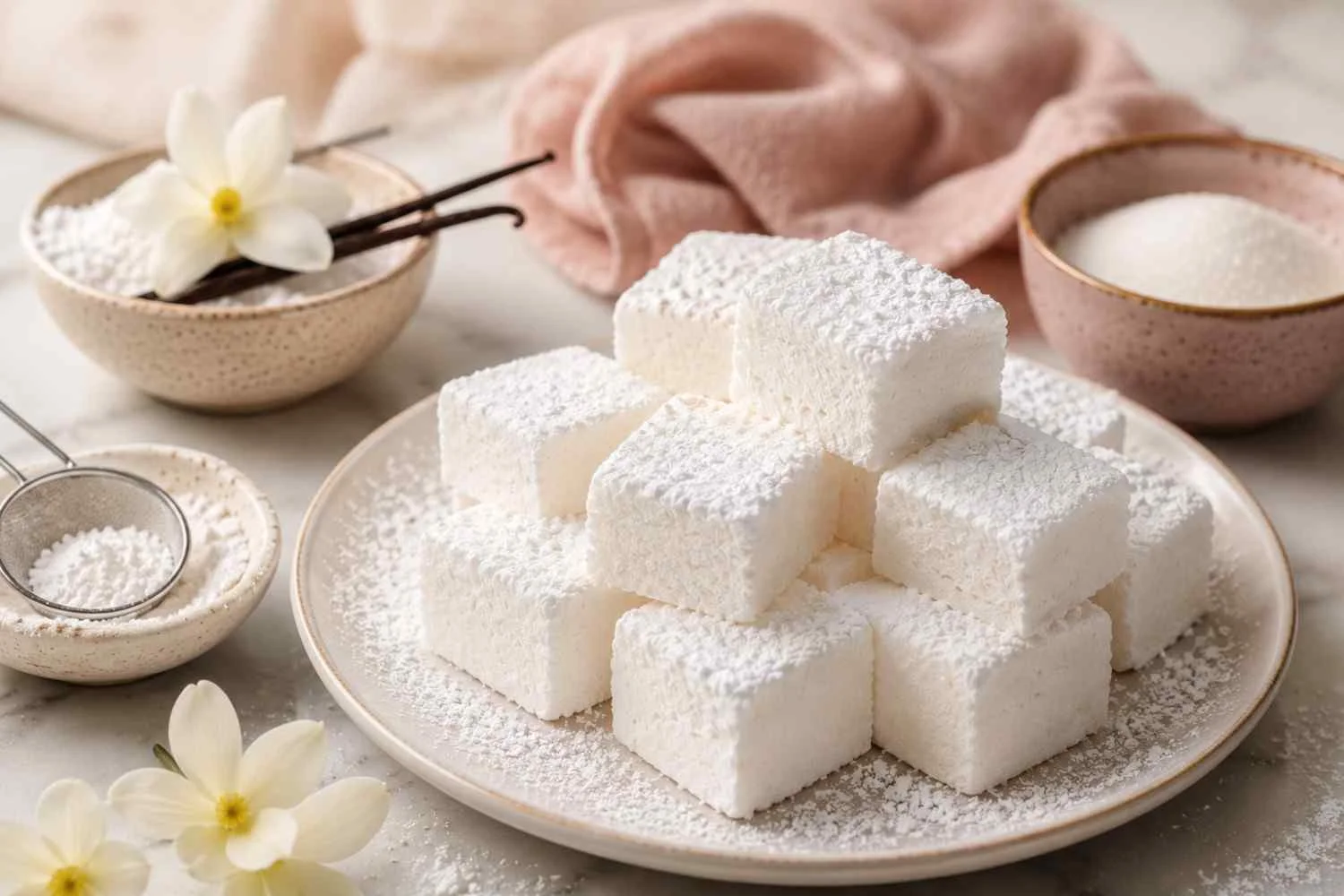
Let’s explore your favorite french marshmallow recipe. French marshmallows, known as guimauves, are a delicate confection celebrated for their light, airy texture and refined flavor. Unlike many store-bought marshmallows, traditional French marshmallows are often made with whipped egg whites, gelatin, sugar syrup, and natural flavorings, resulting in a softer, more luxurious bite. Their elegant appearance and melt in your mouth consistency have made them a favorite in French pâtisseries for generations. We recently published old fashioned flavored marshmallow recipe check our that too.
Recipe at a Glance
Before you begin, here’s a quick overview of this homemade French marshmallow recipe.
| Recipe Detail | Information |
| Recipe Name | French Marshmallow Recipe |
| Prep Time | 30 minutes |
| Cook Time | 15 minutes |
| Setting Time | 6–8 hours |
| Total Time | About 8 hours 45 minutes |
| Yield | 36–40 marshmallows |
| Servings | 36–40 pieces |
| Difficulty | Intermediate |
| Calories | Approximately 45 per marshmallow |

Ingredients You’ll Need
Traditional French marshmallows rely on a handful of quality ingredients that work together to create their signature soft and airy texture. Using fresh ingredients and measuring them accurately will help you achieve the best results.
| Ingredient | Amount |
| Unflavored gelatin | 3 packets (about 21 g) |
| Cold water (for gelatin) | ½ cup |
| Granulated sugar | 2 cups |
| Light corn syrup or glucose syrup | ¾ cup |
| Water (for syrup) | ½ cup |
| Fine salt | ¼ teaspoon |
| Large egg whites, room temperature | 2 |
| Pure vanilla extract | 2 teaspoons |
| Powdered sugar | ½ cup |
| Cornstarch | ½ cup |
Ingredient Breakdown
Unflavored Gelatin
Gelatin gives French marshmallows their delicate structure and soft, springy texture. Allowing it to absorb water before mixing helps it dissolve smoothly into the hot syrup.

Egg Whites
Whipped egg whites are one of the defining features of traditional French marshmallows. They create the light, airy texture that makes guimauves softer and fluffier than many commercial marshmallows.
Granulated Sugar
Sugar forms the sweet syrup that creates the foundation of the marshmallow mixture. Cooking it to the proper temperature is essential for the right consistency.
Light Corn Syrup or Glucose Syrup
Glucose syrup is commonly used in French confectionery because it helps prevent sugar crystallization and produces a smooth, stable marshmallow. Light corn syrup is an excellent substitute if glucose syrup isn’t available.

Water
Water is used to soften the gelatin and dissolve the sugar before it cooks into a syrup. It also helps achieve the correct texture during preparation.
Salt
A small amount of salt balances the sweetness and enhances the flavor without overpowering the marshmallows.
Pure Vanilla Extract
Vanilla is the classic flavoring for French marshmallows. Using pure vanilla extract provides a warm, aromatic flavor that complements the delicate sweetness.
Powdered Sugar and Cornstarch
A mixture of powdered sugar and cornstarch coats the finished marshmallows to keep them from sticking together while giving them a soft, velvety finish.
Expert Tip: Use room-temperature egg whites and make sure your mixing bowl and whisk are perfectly clean. Even a small amount of grease can prevent the egg whites from whipping properly, making it harder to achieve the signature light and fluffy texture of French marshmallows.

How to Prepare French Marshmallows
Get the Gelatin Ready
Lightly grease an 8×8-inch or 9×9-inch baking pan, or line it with parchment paper. In the bowl of a stand mixer, combine the cold water with the unflavored gelatin and let it sit for about 10 minutes until the gelatin has fully absorbed the water.
Heat the Sugar Syrup
In a medium saucepan, combine the granulated sugar, glucose or corn syrup, water, and salt. Heat over medium heat, stirring until the sugar dissolves completely. Once the syrup begins to boil, stop stirring and continue cooking until it reaches 240°F (115°C) on a candy thermometer.
Whip the Egg Whites
While the sugar syrup is cooking, beat the room-temperature egg whites until they form stiff, glossy peaks. The egg whites should hold their shape firmly when you lift the whisk.
Combine the Ingredients

With the mixer running on low speed, carefully pour the hot sugar syrup into the prepared gelatin. Increase the speed to medium-high and mix for about 2 minutes. Gently fold in the whipped egg whites, then continue beating for another 8 to 10 minutes until the mixture becomes thick, glossy, and triples in volume. Add the vanilla extract during the final minute of mixing.
Spread the Mixture into the Pan
Pour the marshmallow mixture into the prepared pan and use a lightly greased spatula to spread it evenly. Smooth the surface so the marshmallows set with an even thickness.
Let the Marshmallows Set
Leave the pan uncovered at room temperature for 6 to 8 hours, or overnight, until the marshmallows are completely firm and easy to remove from the pan.
Cut and Coat the Marshmallows
Mix the powdered sugar and cornstarch in a bowl. Dust your work surface generously, then turn out the marshmallow slab. Cut it into squares using a lightly greased knife or pizza cutter, coating each piece thoroughly in the sugar mixture to prevent stick.

What Makes French Marshmallows Different?
Although French and American marshmallows share a few basic ingredients, they differ significantly in texture, preparation, and presentation. French marshmallows, or guimauves, are known for their light, airy consistency and elegant appearance, making them a popular confection in French pâtisseries.
They Use Whipped Egg Whites
One of the biggest differences is the use of whipped egg whites. Traditional French marshmallows incorporate beaten egg whites into the mixture, creating a softer, lighter texture that feels delicate and almost mousse-like. Many commercial American marshmallows rely on gelatin alone for their structure.
Their Texture Is Softer and More Delicate
French marshmallows are exceptionally soft and tender with a smooth, melt-in-your-mouth consistency. They are less chewy than most store-bought marshmallows and have a more refined, handcrafted feel.
Natural Flavors Take Center Stage
Classic French marshmallows are often flavored with real vanilla, fruit purées, citrus zest, rose water, or other natural ingredients. These subtle flavors create a more sophisticated taste compared to the sweeter, artificial flavors commonly found in mass-produced marshmallows.

They’re Handmade in Small Batches
Many French pâtisseries prepare marshmallows by hand in small batches. This traditional approach allows bakers to focus on quality, resulting in marshmallows with a fresher flavor and a lighter texture.
Presentation Is Part of the Experience
French marshmallows are often cut into neat squares and generously coated with powdered sugar and cornstarch. They may also be dipped in chocolate, rolled in toasted coconut, or decorated with freeze-dried fruit, making them as beautiful as they are delicious.
Interesting Facts About French Marshmallows
French marshmallows have a fascinating history that reflects France’s long tradition of fine confectionery. Here are a few interesting facts about these elegant sweets.
They’re Known as Guimauves
In France, marshmallows are called guimauves. The word has become synonymous with soft, fluffy confections found in bakeries, candy shops, and artisan chocolate boutiques throughout the country.
They Were Inspired by the Marshmallow Plant
Centuries ago, confectioners used sap from the marshmallow plant to create sweet treats believed to soothe sore throats. Modern recipes now use gelatin, making the process simpler while preserving the signature fluffy texture.
French Pâtisseries Offer Many Flavors
Unlike standard vanilla marshmallows, French bakeries often feature seasonal varieties such as raspberry, lemon, blackcurrant, pistachio, coffee, and orange blossom. These flavors highlight the creativity of French pastry chefs.
Homemade Versions Are Becoming More Popular
More home bakers are making French marshmallows from scratch because they can control the ingredients, customize the flavors, and enjoy a fresher taste than many packaged alternatives.
They Make Elegant Homemade Gifts
French marshmallows are frequently packaged in decorative boxes or clear gift bags, making them a thoughtful homemade gift for birthdays, holidays, and other special occasions.
Frequently Asked Questions
What are French marshmallows called?
French marshmallows are called guimauves. They are a traditional French confection known for their soft, airy texture and delicate flavors.
What makes French marshmallows different from regular marshmallows?
Traditional French marshmallows are made with whipped egg whites, giving them a lighter and fluffier texture. They also tend to feature natural flavorings and a more delicate consistency than many commercial marshmallows.
Can I make French marshmallows without glucose syrup?
Yes. Light corn syrup is the most common substitute for glucose syrup and produces very similar results in homemade French marshmallows.
Why are my marshmallows too sticky?
Sticky marshmallows are usually caused by insufficient coating or incomplete setting. Dust each piece generously with the powdered sugar and cornstarch mixture and allow enough time for the marshmallows to firm up before cutting.
How should I store homemade French marshmallows?
Store them in an airtight container at room temperature for up to one week. Avoid refrigerating them, as excess moisture can affect their texture.
Can I freeze French marshmallows?
Freezing is possible, but it’s generally not recommended because thawing may alter their soft, airy texture. They are best enjoyed fresh within a few days of making them.
Can I add different flavors?
Absolutely. Vanilla is the classic choice, but you can also add fruit extracts, citrus zest, rose water, orange blossom water, or freeze-dried fruit powders to create your own variations.
Do I need a candy thermometer?
A candy thermometer is highly recommended because the sugar syrup must reach the correct temperature to produce marshmallows with the ideal texture and stability.
Final Note
This French marshmallow recipe is a wonderful way to experience one of France’s most elegant confections at home. With their delicate texture, light sweetness, and classic vanilla flavor, homemade guimauves offer a refined alternative to ordinary marshmallows. While they require a little patience during preparation, the results are well worth the effort. Whether you’re serving them with hot chocolate, sharing them as homemade gifts, or simply enjoying them as a special treat, these soft and airy French marshmallows are sure to impress with every bite.