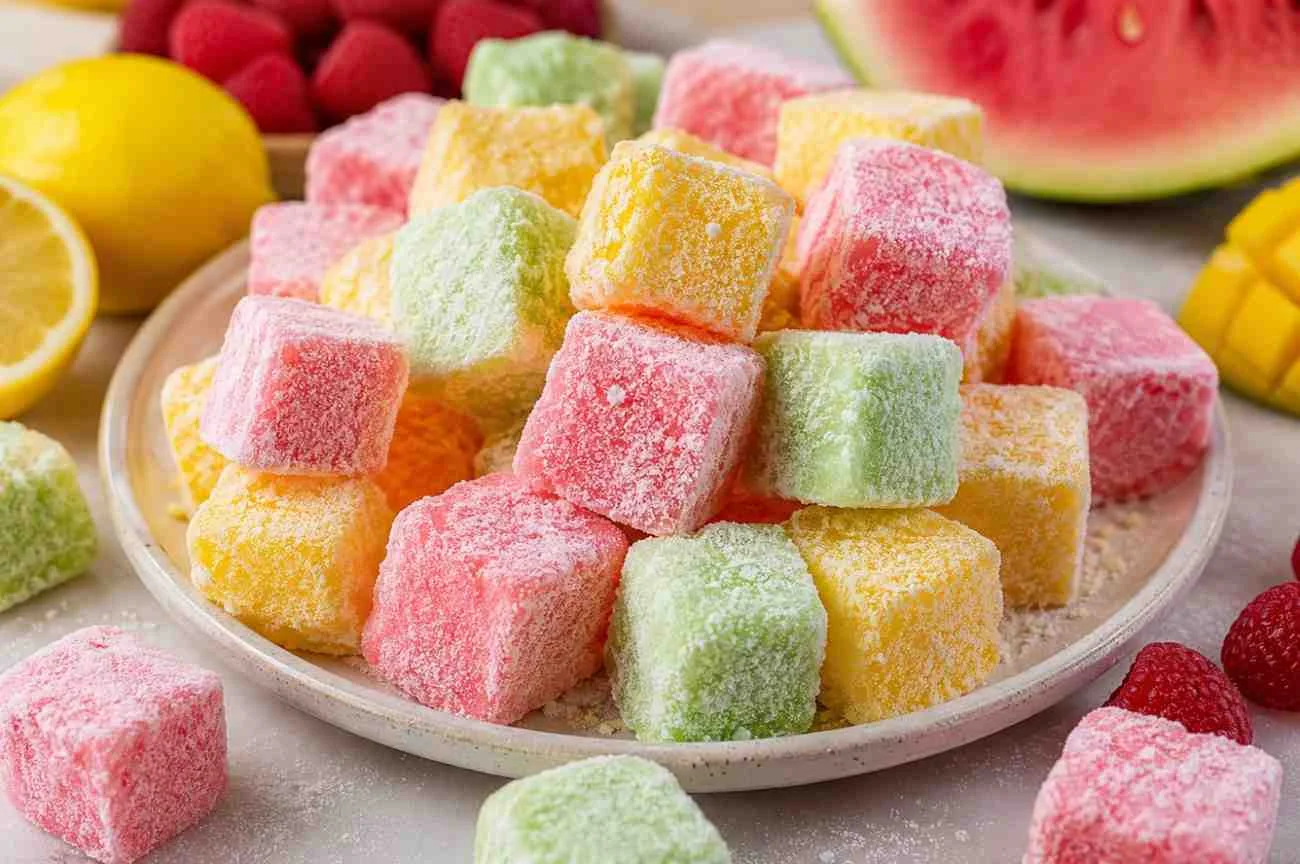
Let’s explore the sour marshmallows recipe here.Sour marshmallows are special homemade marshmallows coated with a citric acid and sugar mixture that delivers a sharp, tangy punch before giving way to soft, fluffy sweetness. The process takes about 1–2 hours (plus setting time) and requires gelatin, corn syrup, sugar, citric acid, and a candy thermometer.
Ingredients
You’ll need two sets of ingredients: one for the marshmallow base and one for the sour coating.
For the Marshmallow Base
| Ingredient | Quantity |
| Unflavored gelatin | 3 packets (21g / 0.75 oz) |
| Cold water (for blooming) | ½ cup |
| Granulated sugar | 1½ cups |
| Light corn syrup | 1 cup |
| Water (for syrup) | ½ cup |
| Salt | ¼ tsp |
| Vanilla extract | 1 tsp |
| Food coloring (optional) | A few drops |

For the Sour Coating
| Ingredient | Quantity |
| Powdered sugar | ½ cup |
| Cornstarch | 2 tbsp |
| Citric acid | 1–2 tsp (to taste) |
Equipment checklist:
- Stand mixer with whisk attachment (or hand mixer)
- Candy thermometer
- 9×13″ baking pan
- Parchment paper or silicone mat
- Sharp knife or cookie cutters
Step by Step Sour Marshmallow Recipe

Step 1: Bloom the Gelatin
Pour ½ cup of cold water into your stand mixer bowl. Sprinkle all three packets of unflavored gelatin evenly over the water. Let it sit for at least 10 minutes. It will look lumpy and weird that’s normal. Don’t rush this step.
Step 2: Cook the Sugar Syrup
Combine granulated sugar, corn syrup, ½ cup of water, and salt in a medium saucepan. Heat over medium-high, stirring until the sugar dissolves. Once the mixture starts boiling, stop stirring and attach your candy thermometer. Cook until the syrup reaches 240°F (115°C) the soft-ball stage.
Why this temperature matters: Below 235°F, marshmallows won’t set firm enough. Above 245°F, they become grainy and stiff. A reliable candy thermometer is non-negotiable here.
Step 3: Whip the Marshmallow

Turn your stand mixer to low speed. Slowly and carefully pour the hot syrup down the side of the bowl into the bloomed gelatin. Avoid pouring directly onto the whisk.
Once all the syrup is added, increase to high speed and whip for 10–12 minutes, until the mixture is thick, fluffy, and holds stiff peaks. Add vanilla extract and food coloring during the last minute of mixing.
Step 4: Spread and Set
Grease a 9×13″ pan and line with parchment paper. Dust lightly with powdered sugar or cornstarch. Pour the marshmallow mixture into the pan and smooth the top with a greased spatula.
Let it set at room temperature for 6–8 hours, or overnight. Do not refrigerate cold temperatures can cause condensation that ruins the texture.
Step 5: Cut and Coat

Once fully set, dust the top of the marshmallow slab with powdered sugar. Flip it onto a cutting board and peel off the parchment. Cut into squares using a sharp knife or pizza cutter (wipe the blade between cuts to keep clean edges).
Mix your sour coating ingredients together in a shallow bowl. Toss the marshmallow pieces in the coating until fully covered. Shake off excess.
What Makes Marshmallows Sour
The “sour” in sour marshmallows comes almost entirely from citric acid, a naturally occurring compound found in citrus fruits. When combined with sugar, citric acid creates the classic sweet-tart contrast that makes sour candy so addictive.

Here’s what you need to know about the sour coating:
| Ingredient | Role |
| Citric acid | Delivers the sharp sour hit |
| Powdered sugar | Balances tartness, prevents sticking |
| Cornstarch | Adds dry texture, reduces clumping |
A standard sour coating ratio is 1 tsp citric acid : 4 tbsp powdered sugar : 1 tbsp cornstarch. Adjust the citric acid up or down depending on how intense you want the tang. Lemon is one of the easiest flavors to customize. For a softer citrus flavor without the extra tang of citric acid, our fresh citrusy lemon marshmallows are a great alternative.
Most competing recipes list citric acid without explaining where to buy it. You can find food-grade citric acid at grocery stores (in the canning aisle), specialty baking shops, or online retailers like Amazon. It’s inexpensive, typically under $10 for a bag that lasts dozens of batches.
What Are the Best Sour Marshmallow Flavor Variations?

The best sour marshmallow flavors use citric acid combined with fruit-flavored extracts or drink mixes. Lemon, raspberry, and watermelon are most popular, but mango, passion fruit, and blue raspberry offer more unique results with the same basic technique.
Here are the top variations worth trying:
| Flavor | Add to marshmallow base | Sour coating tweak |
| Lemon | 1 tsp lemon extract + yellow dye | Add ½ tsp lemon zest to coating |
| Raspberry | 1 tbsp raspberry extract + red dye | Standard coating |
| Watermelon | 1 tsp watermelon extract + pink dye | Add a pinch of green sugar |
| Mango | 1 tbsp mango purée + orange dye | Reduce powdered sugar slightly |
| Passion Fruit | 1 tbsp passion fruit concentrate | Standard coating |
Gap most recipes miss: Fruit purées add real flavor but also add moisture reduce the blooming water by 1 tablespoon per tablespoon of purée to compensate. If you enjoy berry flavors without the sour coating, our fluffy raspberry marshmallow recipe is another delicious option.
How Do You Fix Common Sour Marshmallow Problems?

Even experienced candy makers run into issues. Here’s a quick troubleshooting guide:
| Problem | Likely Cause | Fix |
| Marshmallows won’t set | Syrup undercooked | Make sure it hits 240°F exactly |
| Grainy texture | Syrup overcooked or stirred while boiling | Don’t stir after boiling begins |
| Coating clumps | Too much humidity | Add more cornstarch to coating |
| Marshmallows too sticky to cut | Not set long enough | Wait the full 8 hours |
| Not sour enough | Too little citric acid | Increase by ½ tsp increments |
| Too sour | Over-measured citric acid | Dilute with extra powdered sugar |
How Should You Store Sour Marshmallows to Keep Them Fresh?
Store sour marshmallows in an airtight container at room temperature for up to 3 weeks. Separate layers with parchment paper to prevent sticking. Avoid refrigerating them cold and moisture cause the sour coating to dissolve and the marshmallow to sweat.
- Room temperature: Up to 3 weeks in an airtight container
- Freezer: Up to 3 months—freeze on a tray first, then bag them once solid
- Avoid: Plastic wrap alone (traps moisture), refrigerator (ruins coating)
Can You Make Vegan Sour Marshmallows?
Yes. Replace unflavored gelatin with agar-agar powder, using about 2 teaspoons of agar for every 3 packets of gelatin. The texture will be slightly firmer and less pillowy than traditional marshmallows, but the sour coating works exactly the same way.
Key differences when using agar:
- Agar sets at room temperature much faster—work quickly once the mixture is done whipping
- The final texture is more gel-like and less stretchy
- Agar-based marshmallows should be used within 1 week, as they dry out faster
Creative Ways to Use Sour Marshmallows Beyond Snacking
Most recipes stop at “eat them as candy.” Here’s where things get more interesting:
- Sour hot chocolate topper: Drop 2–3 into hot chocolate for a tart, melting contrast to sweet, creamy cocoa.
- Sour marshmallow cereal treats: Replace regular marshmallows with sour in your favorite recipe for a tart twist on a classic treat.
- S’mores upgrade: Swap out traditional marshmallows for sour ones in your next summer campfire session. The tangy kick pairs surprisingly well with graham crackers and chocolate. For a sweeter gourmet version, swap them for salted caramel marshmallows in your next batch of s’mores.
- Sour peeps: Use a cookie cutter to make fun shapes out of sour marshmallows. Great for decorating cakes or eating straight up.
Why Choose Sour Marshmallows?
Aside from the obvious appeal of their unique taste, there are other reasons to choose sour marshmallows over traditional ones:
- Rice crispy twist: Replace regular marshmallows with sour ones in rice crispy treats
- Cocktail garnish: Skewer on a cocktail pick for margaritas or sour cocktails
- Dessert boards: Pair with dark chocolate, pretzels, and dried mango for a candy platter
- Gift packaging: Bag in clear cellophane with a flavor label for an easy homemade gift
Final Note
Homemade sour marshmallows aren’t complicated but they do reward patience and precision. The two things that trip people up most are rushing the setting time and eyeballing the citric acid. Get those right, and the rest is straightforward.
Start with the classic lemon or raspberry version on your first batch to get a feel for the texture and coating. Once you’re confident with the base recipe, the flavor variations open up a genuinely fun area to experiment with.