A marshmallow recipe without corn syrup is an easy way to make soft, fluffy homemade marshmallows using simple pantry ingredients. If you’re looking for how to make marshmallows without corn syrup, this recipe walks you through the ingredients, equipment, step by step instructions, expert tips, and flavor variations for perfect homemade marshmallows every time.
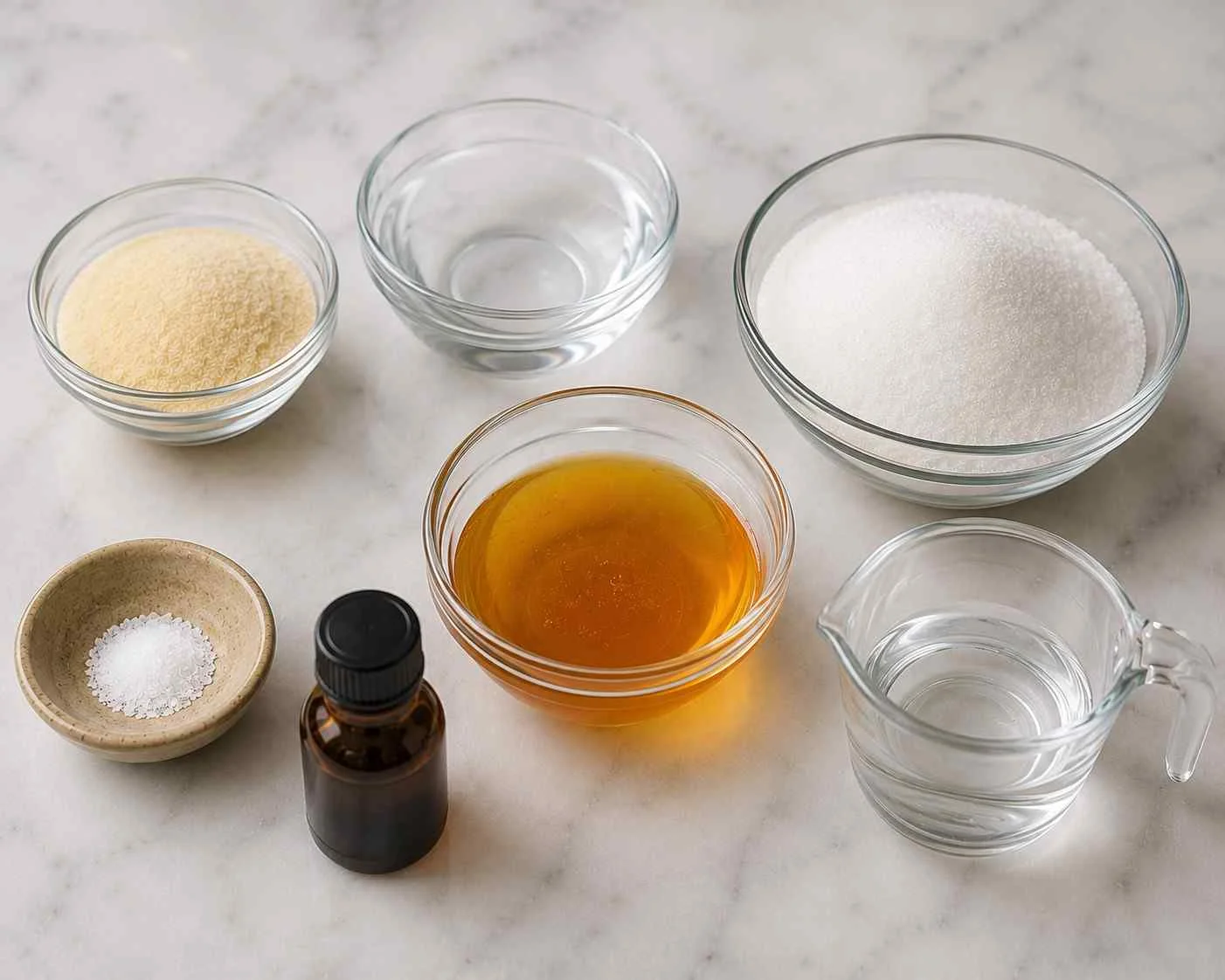
Homemade Marshmallow Recipe Without Corn Syrup
Yield: ~36 marshmallows (depending on cut size)
Prep Time: 20 minutes
Setting Time: 6–8 hours (or overnight)
Total Time: ~8.5 hours
Ingredients You’ll Need
For the Marshmallow Base
1: 3 packets (21g) unflavored gelatin powder
2: ½ cup cold water (for blooming the gelatin)
3: 1½ cups (300g) granulated white sugar
4: ½ cup (170g) honey or agave nectar (corn syrup substitute)
5: ¼ cup water (for the sugar syrup)
6: ¼ tsp fine sea salt
7: 1 tbsp pure vanilla extract
For Coating
1: ½ cup powdered sugar
2: ½ cup cornstarch
Ingredient Notes & Best Substitutions

Gelatin
Standard unflavored gelatin powder works best here. If you need a vegan option, agar-agar can be used, but the texture will be slightly firmer and less elastic. Use about 2 teaspoons of agar powder in place of 3 gelatin packets.
Honey vs. Agave Nectar
Both work as effective corn syrup substitutes because they are invert sugars—meaning they contain fructose and glucose in a free form that resists crystallization. Honey adds a subtle floral flavor, which can be lovely or distracting depending on the application. Agave has a more neutral taste, making it the better choice if you want a classic marshmallow flavor. Light agave nectar is preferred over dark.
Granulated Sugar
Standard white sugar is ideal. Avoid using raw sugar or turbinado, as the larger crystals and molasses content can interfere with the syrup’s texture.
Vanilla Extract
Pure vanilla extract is strongly recommended over imitation. It makes a noticeable difference in flavor, especially in a recipe this simple. Vanilla bean paste is an excellent upgrade.
Coating Mix
The combination of powdered sugar and cornstarch is the classic coating. Powdered sugar alone tends to get sticky over time. If you’re avoiding cornstarch, arrowroot powder is a reliable substitute.

Equipment You’ll Need
1: Stand mixer with whisk attachment (a handheld electric mixer works too, but a stand mixer makes the process much easier)
2: Medium saucepan (heavy-bottomed preferred)
3: Candy thermometer or instant-read thermometer (non-negotiable precision is everything here)
4: 9×13 inch baking dish or pan
5: Parchment paper
6: Cooking spray or neutral oil
7: Rubber spatula
8: Sharp knife or pizza cutter (for cutting marshmallows)
9: Small sifter or fine mesh strainer (for dusting coating)
Getting the equipment right is just as important as the ingredients. Here’s what you’ll need before you start.
How to Make Marshmallows Without Corn Syrup
Step 1: Prepare Your Pan
Lightly grease a 9×13 inch baking dish with cooking spray. Line it with parchment paper, leaving some overhang on the sides, then grease the parchment as well. Sift a generous layer of the powdered sugar and cornstarch mixture over the bottom and sides of the lined pan. Set aside.
Step 2: Bloom the Gelatin
Pour the ½ cup of cold water into the bowl of your stand mixer. Sprinkle the gelatin evenly over the surface of the water. Do not stir. Let it sit for at least 5–10 minutes while you prepare the sugar syrup. The gelatin will absorb the water and become thick and spongy—this is called blooming.

Step 3: Cook the Sugar Syrup
In a medium saucepan, combine the granulated sugar, honey (or agave), and ¼ cup of water. Stir gently to combine, then place over medium heat. Clip your candy thermometer to the side of the pan. Cook without stirring until the mixture reaches 240°F (115°C)—this is the soft-ball stage.
Do not stir the syrup once it begins to boil. Stirring can cause crystallization, which will ruin the texture of your marshmallows.
Step 4: Mix the Gelatin with the Syrup
With your stand mixer running on low speed using the whisk attachment, carefully and slowly pour the hot sugar syrup in a thin, steady stream down the side of the bowl into the bloomed gelatin. Pouring it directly onto the whisk will splatter hot syrup everywhere aim for the inner edge of the bowl.
Once all the syrup is added, add the salt.
Step 5: Whip Until Fluffy
Gradually increase the mixer speed to high. Whip the mixture for 10–15 minutes, until it triples in volume, turns bright white and glossy, and holds stiff peaks. The bowl should feel warm but not hot to the touch. In the final 1–2 minutes, add the vanilla extract.
Step 6: Transfer to the Pan
Working quickly, use a lightly greased rubber spatula to scrape the marshmallow mixture into your prepared pan. Smooth the top as evenly as possible—it will be sticky, so move fast. Sift more of the powdered sugar and cornstarch mixture over the top.

Step 7: Set and Cut
Allow the marshmallows to set uncovered at room temperature for at least 6–8 hours, or preferably overnight. Once firm, lift the marshmallow slab out of the pan using the parchment overhang.
Dust a clean surface with more coating mixture. Using a sharp knife or pizza cutter (greased with cooking spray), cut the slab into squares. Toss each marshmallow in the coating to prevent sticking.
Expert Tips for Marshmallow recipe without corn syrup
- Don’t rush the whipping. Ten to fifteen minutes might feel like a long time, but this step is what creates the light, airy texture. Stopping too early results in dense, gummy marshmallows.
- Temperature is everything. A candy thermometer is not optional—it’s essential. Under-cooking the syrup will produce marshmallows that don’t set. Over-cooking creates a grainy or hard final product. 240°F is your target.
- Humidity matters. Marshmallows are sensitive to moisture. Avoid making them on rainy or humid days if possible, as they can turn sticky and fail to set properly.
- Work fast when transferring. Marshmallow batter stiffens quickly once it stops moving. Have your pan prepped and ready to go before you start whipping.
- Grease everything. Your spatula, your knife, your hands—anything that touches the marshmallow batter should be lightly greased to prevent sticking.
Common Mistakes & How to Fix Them
1: My Marshmallows Won’t Set
This usually means the sugar syrup didn’t reach the correct temperature, or the gelatin wasn’t properly bloomed. Next time, double-check your thermometer accuracy by testing it in boiling water (it should read 212°F at sea level).
2: My Marshmallows Are Grainy or Hard
The syrup was overcooked, or the mixture crystallized during cooking. Ensure you don’t stir the syrup after it comes to a boil, and watch the temperature closely as it approaches 240°F.
3: My Marshmallows Are Too Sticky After Cutting
They need more coating. Toss them generously in the powdered sugar and cornstarch mixture, and make sure they’re fully dry before storing.
4: The Mixture Seized Up Before I Could Spread It
This happens when the batter is worked past its window. Work quickly, and consider slightly warming your pan beforehand to buy yourself a little extra time.
5: My Marshmallows Have a Strong Honey Flavor
Swap the honey for a light agave nectar, which has a much more neutral taste.
Flavor Variations
Once you’ve mastered the base recipe, customizing the flavor is simple and fun.
1: Strawberry Marshmallows
Add 2 tablespoons of freeze-dried strawberry powder along with the vanilla. The color and flavor are vibrant and natural.
2: Chocolate Swirl Marshmallows
Drizzle 2 tablespoons of melted dark chocolate over the marshmallow batter after spreading it in the pan. Use a skewer or knife to create a swirl pattern before it sets.
3: Peppermint Marshmallows
Swap the vanilla extract for ½ teaspoon of pure peppermint extract. Perfect for hot cocoa in winter.
4: Espresso Marshmallows
Dissolve 1 tablespoon of instant espresso powder in the vanilla extract before adding it to the mixture. The coffee flavor is subtle but deeply satisfying.
5: Toasted Coconut Marshmallows
Once cut, roll each marshmallow in toasted shredded coconut instead of the powdered sugar coating.
6: Lemon Marshmallows
Add 1 teaspoon of lemon zest and swap the vanilla for fresh lemon juice. Bright, citrusy, and unexpected.
Why You’ll Love This Marshmallow Recipe Without Corn Syrup
This marshmallow recipe without corn syrup delivers the same soft, fluffy texture as traditional recipes while using honey or agave nectar as an effective substitute. If you prefer using honey as the primary sweetener, our honey sweetened marshmallow recipe is another delicious variation worth trying. The marshmallows stay light, airy, and easy to customize with different flavors, making them perfect for hot chocolate, desserts, gifting, or enjoying on their own. Once you’ve mastered the simple technique, you’ll have a reliable homemade recipe that doesn’t rely on corn syrup.